A guest article for The Biomomicry Instutute by Katrin Ley, Managing Director, Fashion for Good
Undeniably, nature is the ultimate engineer. When you look at the natural world, flexibility and resilience are everywhere, from the snapping back of a spider web in the wind to the incredible elasticity of a mammal’s muscle tissue. Crucially, nature achieves this high-performance stretch without leaving behind un-recyclable waste. In the natural world, everything eventually breaks down and becomes nutrient fodder for the next cycle.
At Fashion for Good, a key part of our work is finding solutions that allow the industry to adopt the kind of circular efficiency we see in the natural world. The Stretching Circularity Project is a perfect example of this focus in action.
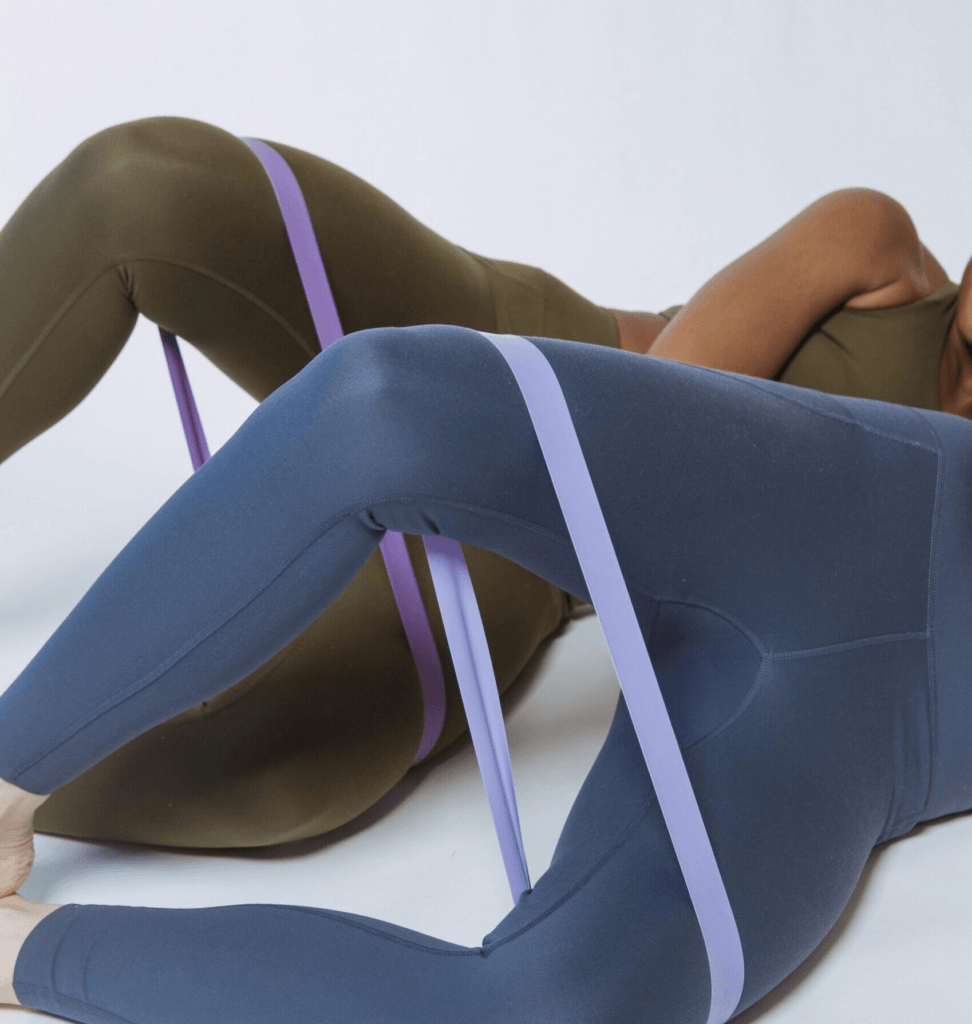
To understand why this initiative is so critical, we first have to talk about one of fashion’s most notoriously problematic fibres: elastane. Also known as spandex or Lycra, elastane is what gives our activewear its stretch and our favourite jeans their comfortable, forgiving fit. It is a marvel of synthetic chemistry, capable of stretching up to 500% and snapping right back to its original shape (to a limit).
But unlike nature’s flexible materials, conventional elastane is entirely fossil-based. Its production relies heavily on non-renewable petroleum, generating a massive carbon footprint. Worse still, it acts as a stubborn roadblock to the circular economy. Even if a garment is made of 98% organic cotton, that remaining 2% of elastane acts as a synthetic contaminant. It disrupts the textile-to-textile recycling process, preventing the recovery of the natural fibres and usually condemning the entire garment to a landfill or downcycling. It’s a linear dead-end in an industry that desperately needs closed loops.
Through the Stretching Circularity Project, we are bringing together a coalition of brands, innovators, and supply chain partners to validate next-generation elastane solutions. A major pillar of this work, and where we see a beautiful alignment with biomimicry principles, is the advancement of bio-elastane.
Instead of drilling for ancient, fossilised carbon, bio-elastane relies on alternative, renewable biological inputs to create the chemistry needed for stretching. By shifting our feedstocks from petroleum to bio-based materials, we are taking a vital step toward mimicking nature’s own manufacturing processes.
But true biomimicry isn’t just about swapping out ingredients; it’s about understanding the entire ecosystem. In a natural system, there is no “end of life,” only regeneration. That’s why our project pairs the testing of bio-based materials with the testing of emerging recycling technologies. We are actively assessing innovations that can successfully separate elastane from blended textiles, ensuring that these next-generation materials can be reclaimed and looped back into new fibres.
Right now, many of these bio-elastane solutions are in their early stages. They lack the pilot-scale validation and the hard data that global brands need to confidently adopt them. By running pilot-scale testing, Fashion for Good is generating the comparative data on performance, environmental impact, and commercial feasibility needed to de-risk these innovations and scale them up.
We believe the future of fashion lies in learning from the natural world. By replacing fossil-fuel-based stretch with bio-elastane and building the systems to recycle it, we’re removing a massive barrier to textile circularity. We are finally teaching our clothes how to stretch, snap back, and regenerate, just as nature intended.