It’s late 2025, and a lot has changed since the most popular essay collection in AskNature’s history thus far, “How Does Nature Build a Home?“, was first published in early 2023. Back then, I was not staff at the Institute. I was a writer who had an idea I was obsessed with and found the perfect home for it. At the Institute, especially this year, we are deeply exploring what home really means—not just as a structure, but as a concept intertwined with our built environment and seeing how identity, history, and the very land we stand on affect and have an effect on it. Back then I looked to ancestral, natural building methods like tapia pisada and bahareque in Colombia, and adobe from places like New Mexico, recognizing them as ancient, living examples of biomimicry and a profound connection to our planet.
Today, those lessons feel more urgent than ever. The conversation around home has shifted dramatically, fueled by the polycrisis, housing affordability, and a growing desire for sustainability and resilience in the face of a world averting collapse.
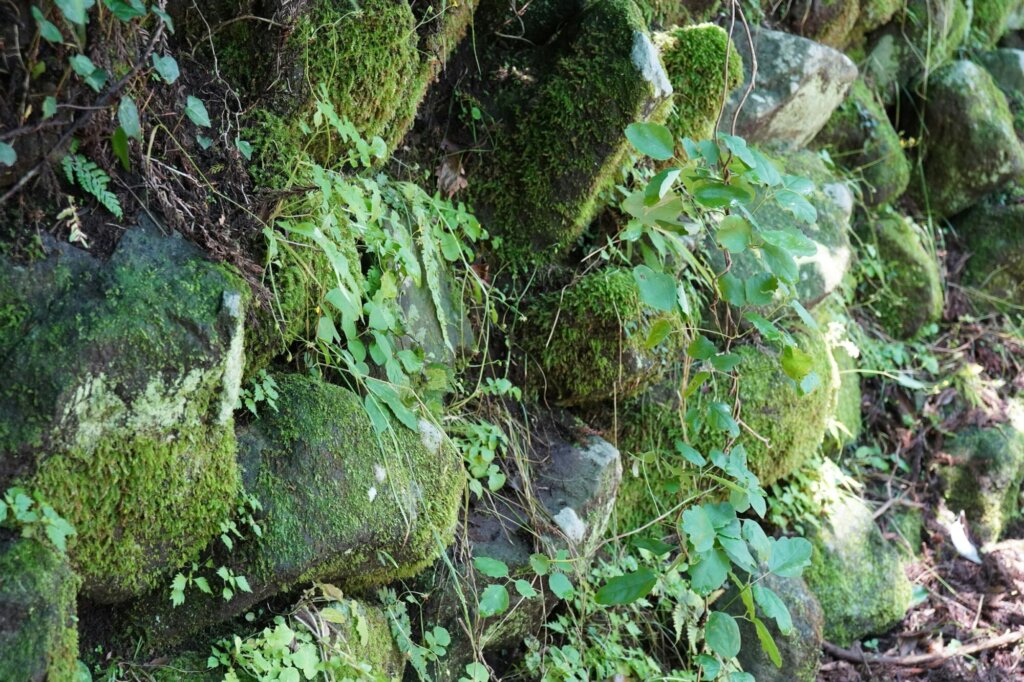
The Enduring Wisdom of Earthen Walls
In 2022, the focus was on realizing that we are part of a continuum of homemaking entities, a lineage that goes far beyond Homo sapiens. We saw how simple materials like earth and wood—which are reversible and can reintegrate into the system that brought them together—represent a stark contrast to the dead materials of industrial, irreversible processes.
Fast forward to the end of 2025: this philosophy is gaining serious traction. After a series of intense weather events globally, the enduring quality of well-maintained natural buildings—like adobe’s fire resistance or the thermal adaptability of tapia—is no longer a niche interest; it’s a mainstream discussion on disaster-proof housing.
The idea that the necessary information to build a home is not just in a blueprint or an algorithm, but in the compacting sound of the earth under a mason’s foot (the “tapiero master”), has moved into educational programs. People are actively seeking out elders and traditional practitioners like Ramón Atuesta and the skills of their grandfathers, as Santino “Tino” Gonzales did, to learn these low-tech, high-wisdom techniques. Tino’s idea that the adobe brick is a “container of history, of information, and of knowledge” now rings true for a generation disillusioned with mass-produced everything. People want materials that are witnesses and participants in their history, not just temporary products. The demand for locally-sourced, low-carbon building supplies has skyrocketed, pushing for policy changes that encourage earth-building.
Redefining ‘Home’ on Stolen Land
The core truth that underpins this search for an authentic home remains: the realization that you might have not built the structure you reside in, because others might have, before you, in stolen land. This isn’t a call for destruction, but for a mindful, respectful inhabitation.
The challenge now, in 2025, is moving from acknowledgment to action. Building naturally is an act of deep listening. An intentional act of heeding the lessons from the animals, the soil, the land, and its existing materials, mirroring the Indigenous perspective and bioregional angle that sees construction as an intimate engagement with other species. It’s all interdependency. It means transforming matter while recognizing its inherent life and death cycle, as noted by the engineer Santiago Rivero Bolaños.
The ultimate barrier to creating truly sustainable homes isn’t a lack of materials or technology, but what I called “the enemy within the home, our own egos.” Are we willing to step away from hyper-industrialized materials, and our self-absorption with our technical creation, and embrace methods that require patience, physical presence, and the humility to learn from our ancestors and nature?
The good news is that this transformation is happening, brick by reversible brick. We’re learning that to feel at home—to find that comfort, refuge, and sanctuary—we don’t have to destroy the structure of our lives, but rather, we must re-engage with the essential elements that comprise it: the soil, the wood, the hands, and the knowledge passed down through generations.
What’s our role here?
The work is to keep playing with soil, connecting with the profound reality that our only enduring home is the Earth itself, and the best way to live in it is to build with it.
Camilo Garzón is the AskNature Program Director at the Biomimicry Institute, where he leads the platform, program, and publication efforts to expand access to nature-inspired innovation. His diverse body of work spans various disciplines and media, and is dedicated to amplifying underrepresented perspectives in science media. Learn more about Camilo, and the rest of the Biomimicry Institute team here.