
In 2009, a movement began in NYC that has since sparked over 20 annual Climate Weeks worldwide. This year marked my third time attending LA Climate Week (LACW), and witnessing its evolution has been quite incredible. Seeing it grow from ~100 events to over 300 sessions spanning from Malibu to Long Beach and Venice to Pasadena, culminating in an official proclamation by the Los Angeles County Board of Supervisors, is a testament to the region’s momentum. As the lone SoCal member of the Biomimicry Institute, I tuned into this year’s theme “Designing Our Climate Future, Together,” with specific questions in mind: How do we design our climate future, together with nature? And how do we bridge the 3.8 billion years of R&D with the LA ecosystem and the worlds of climate tech and capital?
The LACW landscape
LA’s unique geography and historical roots are shaping LACW’s distinct identity, carving out a space for community-based events, art, storytelling, and entertainment. I am often asked how LACW compares to other climate weeks: NYC Climate Week is significantly larger (over 1,000 events) and more established. Its history and global draw make it deeply international, hosting everyone from indigenous leaders to the world’s largest corporations, with sub-themes including building a resilient economy, and advancing nature-based solutions (defined as actions to protect, sustainably manage, and restore natural or modified ecosystems). San Francisco Climate Week, only a year older than LA’s, has seen rapid traction with over 650 events in 2026, leaning into deep science and venture-backed tech.
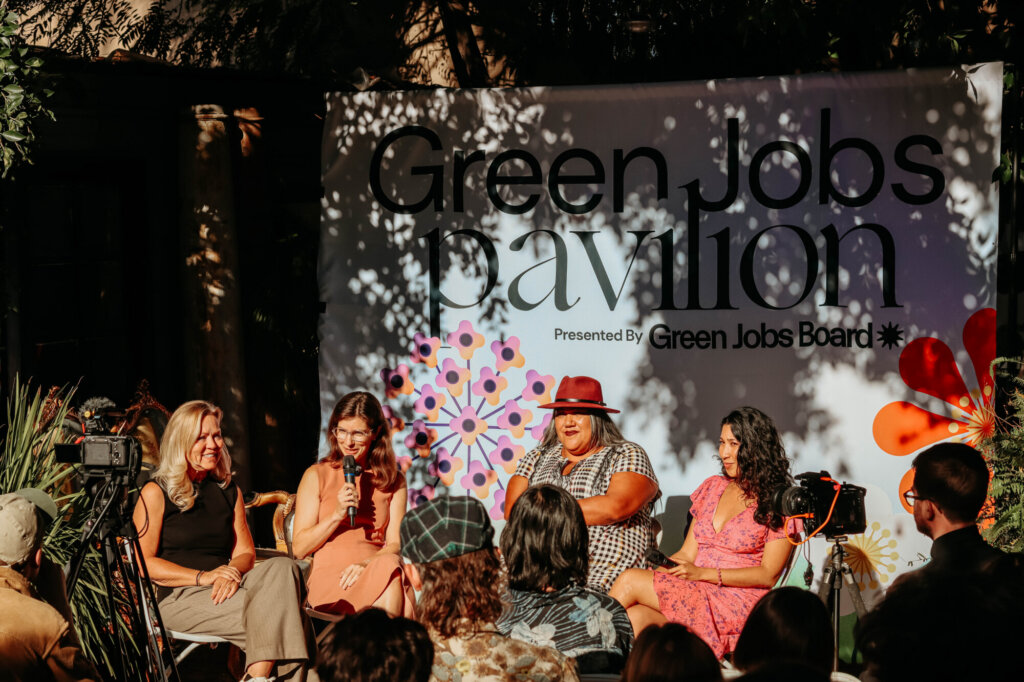
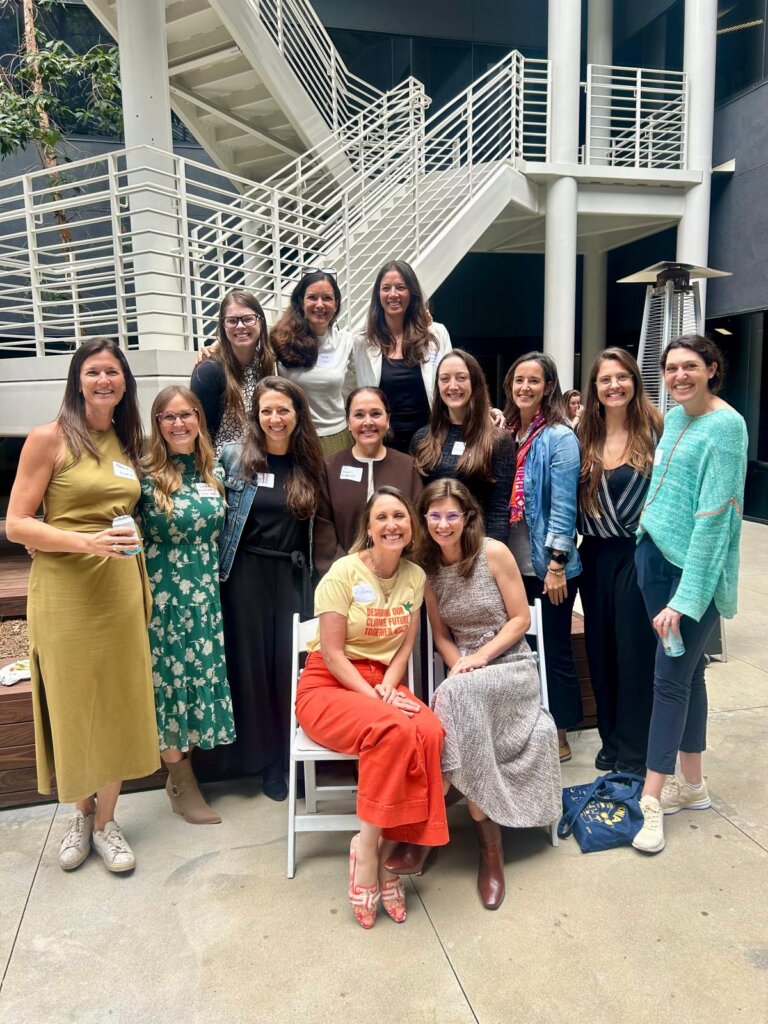
From celebrating the organizers and volunteers at the Opening Ceremony at the Ebell Theatre to attending SidePorch’s “Resilience & Long Horizons” and speaking on the climate tech panel at the LA Green Jobs Pavilion, the week was about the people doing the work. I am grateful for organizers like Women in Cleantech and Sustainability for hosting outdoor events like their hike. Even if I couldn’t make it on that Sunday morning, I appreciate that nature is also becoming the venue!
The Biomimicry “Aha” Moment
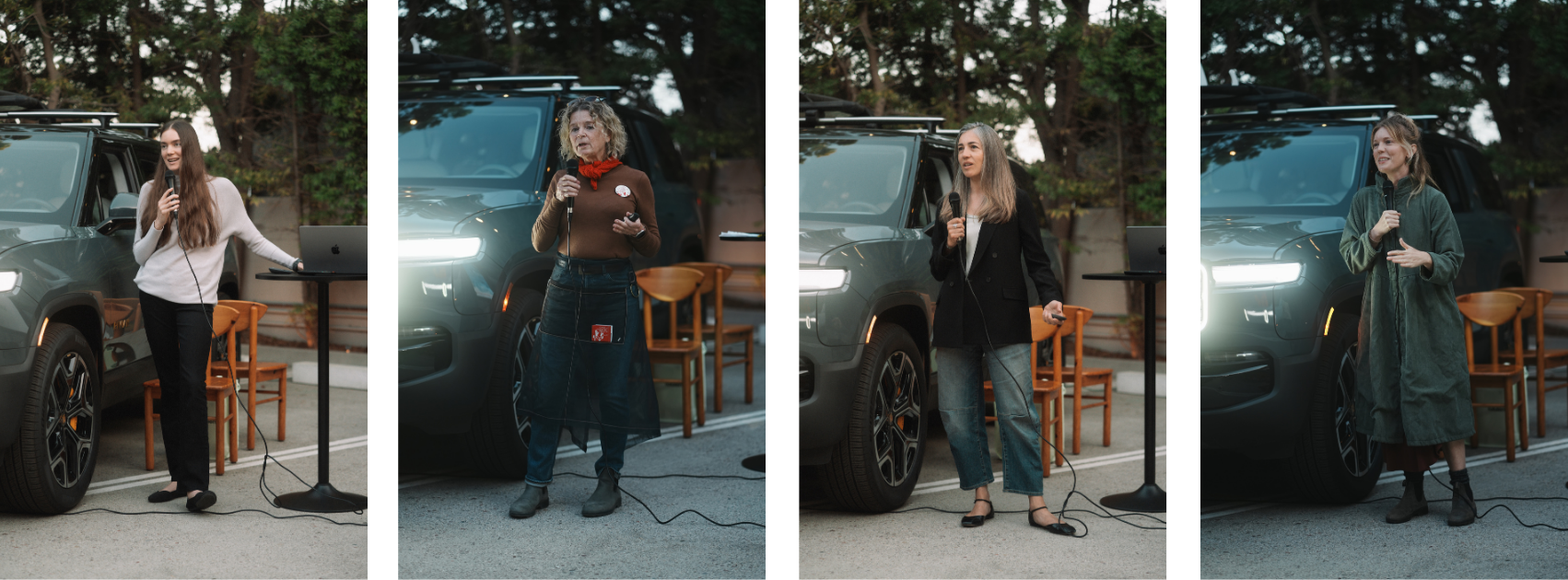
Amidst 300 events, nature-inspired startup and Ray of Hope Accelerator alum GRoW Oyster Reefs hosted an evening of presentations and conversations at Rivian in Venice. It stood out as the only space on the calendar that week dedicated specifically to the intersection of nature and tech (and if I missed another, please ping me!). I was honored to co-facilitate the evening, with Grow Oyster Reefs COO David Turnbull. That evening was a reminder: while I live in the world of biomimicry innovation daily, for many, the concept is still brand new and mind-blowing, just as it was for me when I first encountered biomimicry in a chemistry class years ago.
I watched the room experience a collective “aha” moment as four female founders shared their origin stories and the reality of their entrepreneurial journeys:
Ella Csuka (founder and CEO of Ecotune): Molecularly engineering high-performance bio-materials. Ecotune was a participant in the 2025 accelerator cohort, learn more about it on AskNature.
Evelyn Tickle (founder and CEO of GRoW Oyster Reefs): Rethinking shoreline restoration through biomimetic concrete and designs. GRoW Oyster Reefs was a participant in the 2021 accelerator cohort, learn more about what they’re building on AskNature.
Alyson Santoro (co-founder and CEO of Nereid Biomaterials): Creating marine-safe polymers that actually disappear after their job is done.
Danielle Stevenson (founder and President of the Centre for Applied Ecological Remediation): Using fungi, plants, microbes and ecological research to equitably heal polluted sites.
These founders are leading incredible research and de-risking efforts (both on the tech and the commercialization side) that prove working with nature yields incredible results and can achieve great traction. But seeing their brilliance in person highlighted a persistent friction in our ecosystem: the gap between visionary innovation and venture reality.
An uphill climb and better bets
The fact that only 2%* of VC capital goes to women-led startups is a reminder of the uphill climb these founders face. When you combine that with the reality that nature-forward solutions often take a backseat to more “urgent” or “pressing” headlines, it can feel like some are building against impossible odds.
In parallel, studies** show that female-led startups are consistently more capital-efficient, generating 78 cents for every dollar invested compared to 31 cents from their male-founded peers. To me, this is an important signal that investors should pay attention to, with an opportunity to contribute to reshaping the odds.
To complete the picture, LA is capturing only 5% of US VC funding, dwarfed by San Francisco’s 46%***, so locally we are looking at a massive missed opportunity.
* PitchBook, US VC female founders dashboard
** BCG: Why Women-Owned Startups Are a Better Bet
*** San Francisco Examiner, Bay Area accounts for record share of venture investment in Q1
As I look toward the next iteration of our climate movement, these numbers leave me with a set of questions:
- How do we design a Climate Week that integrates nature’s cycles and planetary limits as core design constraints?
- How do we bridge the geographic gap, not just to bring more outside investors to LA, but to draw our local LA investment community deeper into the Climate Week ecosystem?
- How do we continue to build a support system specifically tailored for these biomimicry and nature-inspired startups as they move to market-wide adoption?
- How do we amplify this momentum so that it sustains our community year-round?
A Manifesto: Nature-Inspired Design as the Blueprint
For over two decades, the Biomimicry Institute has championed the idea that the most sophisticated R&D on the planet is 3.8 billion years old, and our portfolio of 60 nature-inspired startups proves that these solutions are ready and scaling. They are living evidence that we can build industries that align with the planet rather than deplete it. May I suggest that nature-inspired design should be the blueprint for the entire week? My call for 2027 is also to invite more investors to the table (across asset classes), amplify the solutions that are already scaling, and ensure that our climate strategy respects the planetary limits we are trying to protect.
Maëlys Renaud is the Program Manager of the Ray of Hope Accelerator. She is a chemist, open-innovation enthusiast, and former Science Diplomat. Maëlys joined the Institute to identify, support and accelerate nature-inspired startups. Learn more about Maëlys and the rest of the team here.